
Master Data Management and Data Conversion

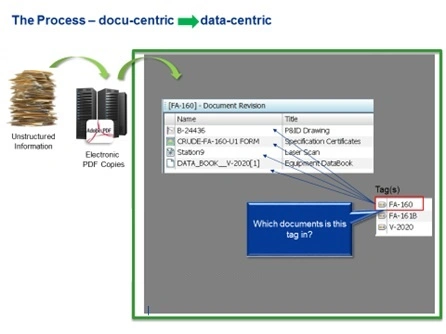
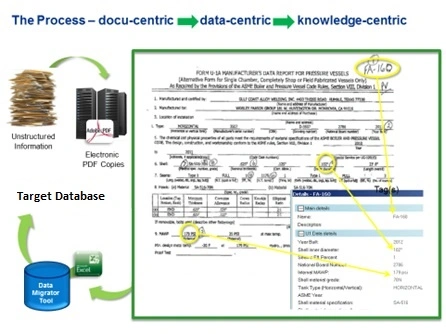
Of the three key elements of asset integrity programs, technology can be the most time-consuming. In fact, the data collection effort for the RBI software solution can represent over 50 percent of the costs of an RBI project. In our quest for excellence, we partner with Intergraph to utilize their innovative technology, Fusion. Fusion dramatically improves our time to value when delivering sustainable RBI programs. This technology allows our engineers to more quickly and efficiently extract accurate, current equipment, and piping data transitioning the Owner Operator from a document-centric world to a data centric world and finally taking the inevitable step to a knowledge centric world where trustworthy data is converted into the requisite knowledge to sustain the operations, maintenance, and reliability of the plant.
Related Services
AOC has delivered thousands of sustainable Risk Based Inspection (RBI) programs earning the trust of owner operators.
Development of maintenance strategies, recommendations, and plans to implement best practices and increase asset life
An interdependent assessment of your people, process, and technologies for a confident path forward
Related Tools
Create mechanical integrity (MI) program value rather than it being seen as a necessary cost to minimize.
Related Training
How do I use GE APM to perform MI/RBI tasks?
How does GE APM RBI software estimate risk?
How do I use RBMI to perform MI/RBI tasks?
How does RBMI software estimate risk?
How do I manage and sustain my MI/RBI program using RBMI software?
Related Knowledge
Don’t let your RBI program become a "paperwork exercise." Learn how to distinguish between a qualified technical partner and a software-only contractor to ensure true operational safety.
How AOC's new AI solution cuts data collection time for Risk-Based Inspection (RBI) projects by automatically extracting and normalizing data from historical engineering documents, achieving very high accuracy and reducing costs.
A targeted AI platform using a centralized repository of global loss-of-containment events to identify failure patterns, improve RBI predictions, strengthen mechanical integrity, and provide continuously updated, data-driven risk recommendations.
Practical guide for implementing a Mechanical Integrity and RBI program for U.S. oil and gas wellfield, gathering, and midstream facilities. Aligns lifecycle asset management, inspection, and risk control with API standards, PHMSA pipeline rules, and OSHA PSM requirements.
A globally standardized Loss of Containment Event Repository using validated data, controlled taxonomies, traceable evidence, and confidence scoring to improve RBI, mechanical integrity, process safety, and AI-driven failure prediction.
Unified framework integrating MI, RCM, PHA, and SIL/SIS into one risk-based system using a common matrix, shared failure modes, and closed-loop feedback to align actions, prioritize resources, and ensure consistent, real-world risk reduction.
What does a strong refining culture actually look like in practice? Explore seven key attributes, from technical authority to management presence, that transform culture into a powerful risk-control system.
A formal acceptable risk policy standardizes risk tolerance, assigns decision authority by risk level, and requires escalating approvals for higher risk, improving consistency, transparency, and resource prioritization while preventing unmanaged risk exposure.
Safety-first organizations consistently outperform on reliability when priorities are truly enforced, not just stated.
Reflections on the importance of ensuring your data is accurate and on the impact that having poor data can have on your risk analysis.

Asset Optimization is the authority on asset integrity solutions that align your people, process, and technology with unmatched returns across your enterprise.
About AOC
Consulting Activities
Contact Us
United States
16000 Barkers Point LaneSuite 105
Houston, TX 77079
Phone: +1 (281) 909-7333
Email: info@aoccorp.com
Europe
CATCH Facility,Redwood Park Estate,
Stallingborough,
Grimsby, North East Lincolnshire,
DN41 8TH, United Kingdom
Phone: 00 44 (0) 1469 552875
Copyright © 2024 Asset Optimization Consultants, Inc. All Rights Reserved.
Service Inquiry