
Mechanical Integrity: Development of Procedures, Work Processes, and Human Performance
The best maintenance systems are designed such that all elements work together as a quality system. If even one element is missing or poorly designed, the performance of the maintenance system suffers and is not as effective as it can be.
Asset Optimization Consultants designs mechanical integrity maintenance systems that account for each element, which improves the quality and sustainability of your RBI work processes and procedures. These improvements transform personnel, enabling them to embrace new processes and procedures and to develop discipline and effective behaviors in all circumstances.
The result is an enhanced culture of safety and performance with an effective, compliant, reliable operation.
Related Services
AOC delivers the policies, procedures, work processes, knowledge and actions such as preventive maintenance, predictive maintenance, and condition monitoring tasks.
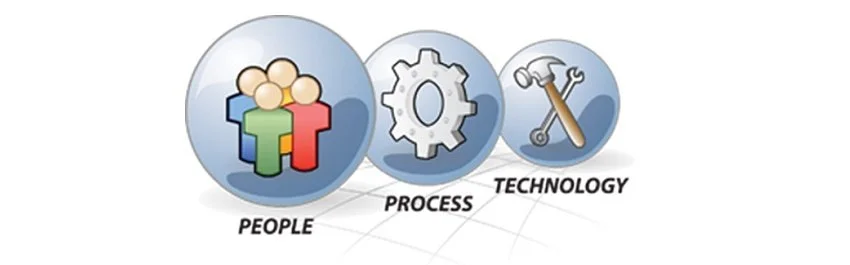
An interdependent assessment of your people, process, and technologies for a confident path forward
AOC has delivered thousands of sustainable Risk Based Inspection (RBI) programs earning the trust of owner operators.
Related Tools
Create mechanical integrity (MI) program value rather than it being seen as a necessary cost to minimize.
Is your plant's MI program compliant? Use our checklist to assess your current program against industry standards and receive expert recommendations for improvement.
Related Training
A high level overview introducing Mechanical Integrity and Risk Based Inspection
How do I use GE APM to perform MI/RBI tasks?
How do I transfer knowledge to my team and verify their skills?
What are your goals for RBI? How will you measure your success? How will you sustain that success?
Are your inspectors empowered to sustain your RBI program after the service provider completes their fixed price contract?
Related Knowledge
A formal acceptable risk policy standardizes risk tolerance, assigns decision authority by risk level, and requires escalating approvals for higher risk, improving consistency, transparency, and resource prioritization while preventing unmanaged risk exposure.
MOC fails not from lack of knowledge, but from conflict with operational pressures. Speed is rewarded over rigor, definitions are unclear, ownership is weak, and risk reviews become procedural, allowing changes, cumulative risk, and hazards to go unmanaged.
What does a strong refining culture actually look like in practice? Explore seven key attributes, from technical authority to management presence, that transform culture into a powerful risk-control system.
Unified framework integrating MI, RCM, PHA, and SIL/SIS into one risk-based system using a common matrix, shared failure modes, and closed-loop feedback to align actions, prioritize resources, and ensure consistent, real-world risk reduction.
"Good inspection" is not defined by technical tools, but by a leadership choice to allow the truth about equipment condition to surface. Learn why management is the most critical variable in mechanical integrity.
Practical guide for implementing a Mechanical Integrity and RBI program for U.S. oil and gas wellfield, gathering, and midstream facilities. Aligns lifecycle asset management, inspection, and risk control with API standards, PHMSA pipeline rules, and OSHA PSM requirements.
Organizations that follow the spirit of risk-based inspection rather than its minimum requirements use a definable, structured, auditable process to confirm that an alternate inspection technique provides equal or better risk reduction than a baseline method.
Safety-first organizations consistently outperform on reliability when priorities are truly enforced, not just stated.
Don’t let your RBI program become a "paperwork exercise." Learn how to distinguish between a qualified technical partner and a software-only contractor to ensure true operational safety.
A dysfunctionality found in many refineries, chemical plants, and other production facilities, is a lack of common asset management work processes.

Asset Optimization is the authority on asset integrity solutions that align your people, process, and technology with unmatched returns across your enterprise.
About AOC
Consulting Activities
Contact Us
United States
16000 Barkers Point LaneSuite 105
Houston, TX 77079
Phone: +1 (281) 909-7333
Email: info@aoccorp.com
Europe
CATCH Facility,Redwood Park Estate,
Stallingborough,
Grimsby, North East Lincolnshire,
DN41 8TH, United Kingdom
Phone: 00 44 (0) 1469 552875
Copyright © 2024 Asset Optimization Consultants, Inc. All Rights Reserved.
Service Inquiry